

Chronic/Pain Conditions >> Multiple Sclerosis

To attend a FREE Class on this topic, Click Here
In this video, Dr. Huntoon discusses the
4 Causes of ALL Health Concerns
and asks you to consider if your Medical Doctor looked into all 4 before recommending treatment.
Having worked with many people who have been told the have MS, Dr. Huntoon has many tools to keep this from becoming a life sentence.
Have you been told you have MS after age 40? If so, you need to have a conversation with Dr. Huntoon to learn the truth.

To Request an Action Plan to
Address Multiple Sclerosis Click Here
Multiple Sclerosis
Also know as MS or Demyelinating disease, Multiple sclerosis is an autoimmune disease that affects the brain and spinal cord (central nervous system).
SIGNS AND TESTS
Symptoms of MS may mimic those of many other nervous system disorders. The disease is diagnosed by ruling out other conditions. Primarily, heavy metal toxicity affecting the Nervous System is the main consideration for people who have symptoms that mimic MS.
People who have a form of MS called relapsing-remitting may have a history of at least two attacks, separated by a period of reduced or no symptoms. This is most likely due to heavy metal toxicity and testing should be conducted to rule this out.
The health care provider may suspect MS if there are decreases in the function of two different parts of the central nervous system (such as abnormal reflexes) at two different times.
A neurological exam may show reduced nerve function in one area of the body, or spread over many parts of the body. The exam will primarily be looking for abnormal nerve reflexes, decreased ability to move a part of the body, decreased or abnormal sensation, or other loss of nervous system functions.
An eye examination will be looking for abnormal pupil responses, changes in the visual fields or eye movements, decreased visual acuity, problems with the inside parts of the eye, and rapid eye movements triggered when the eye moves.
Tests to diagnose multiple sclerosis include: Lumbar puncture (spinal tap) for cerebrospinal fluid tests, including CSF oligoclonal banding, MRI scans of the brain and spine of the spine, and Nerve function studies (evoked potential test) are the most common diagnostic tests performed to help diagnose and follow MS.
Symptoms
Symptoms vary, because the location and severity of each attack can be different. Episodes can last for days, weeks, or months. These episodes alternate with periods of reduced or no symptoms (remissions). Fever, hot baths, sun exposure, and stress can trigger or worsen attacks.
It is common for the disease to return (relapse). However, the disease may continue to get worse without periods of remission. Because nerves in any part of the brain or spinal cord may be damaged, patients with multiple sclerosis can have symptoms in many parts of the body.
Muscle symptoms:
- Loss of balance
- Muscle spasms
- Numbness or abnormal sensation in any area
- Problems moving arms or legs
- Problems walking
- Problems with coordination and making small movements
- Tremor in one or more arms or legs
- Weakness in one or more arms or legs
Bowel and bladder symptoms:
- Constipation and stool leakage
- Difficulty beginning to urinate
- Frequent need to urinate
- Strong urge to urinate
- Urine leakage (incontinence)
Eye symptoms:
- Double vision
- Eye discomfort
- Uncontrollable rapid eye movements
- Vision loss (usually affects one eye at a time)
Numbness, tingling, or pain:
- Facial pain
- Painful muscle spasms
- Tingling, crawling, or burning feeling in the arms and legs
Other brain and nerve symptoms:
- Decreased attention span, poor judgment, and memory loss
- Difficulty reasoning and solving problems
- Depression or feelings of sadness
- Dizziness and balance problems
- Hearing loss
Sexual symptoms:
- Problems with erections
- Problems with vaginal lubrication
Speech and swallowing symptoms:
- Slurred or difficult-to-understand speech
- Trouble chewing and swallowing
Fatigue is a common and bothersome symptoms as MS progresses. It is often worse in the late afternoon.
Causes
CAUSES, INCIDENCE, AND RISK FACTORS
Multiple sclerosis (MS) affects women more than men. The disorder is most commonly diagnosed between ages 20 and 40, but can be seen at any age. If it is seen after age 45, strongly consider looking into heavy metal toxicity. Heavy Metals, from our environment can enter into the body and can be deposited within the Central Nervous System and mimic Multiple Sclerosis (MS).
MS is caused by damage to the myelin sheath, the protective covering that surrounds nerve cells. When this nerve covering is damaged, nerve signals slow down or stop. The nerve damage is caused by inflammation. Inflammation occurs when the body's own immune cells attack the nervous system. This can occur along any area of the brain, optic nerve, and spinal cord.
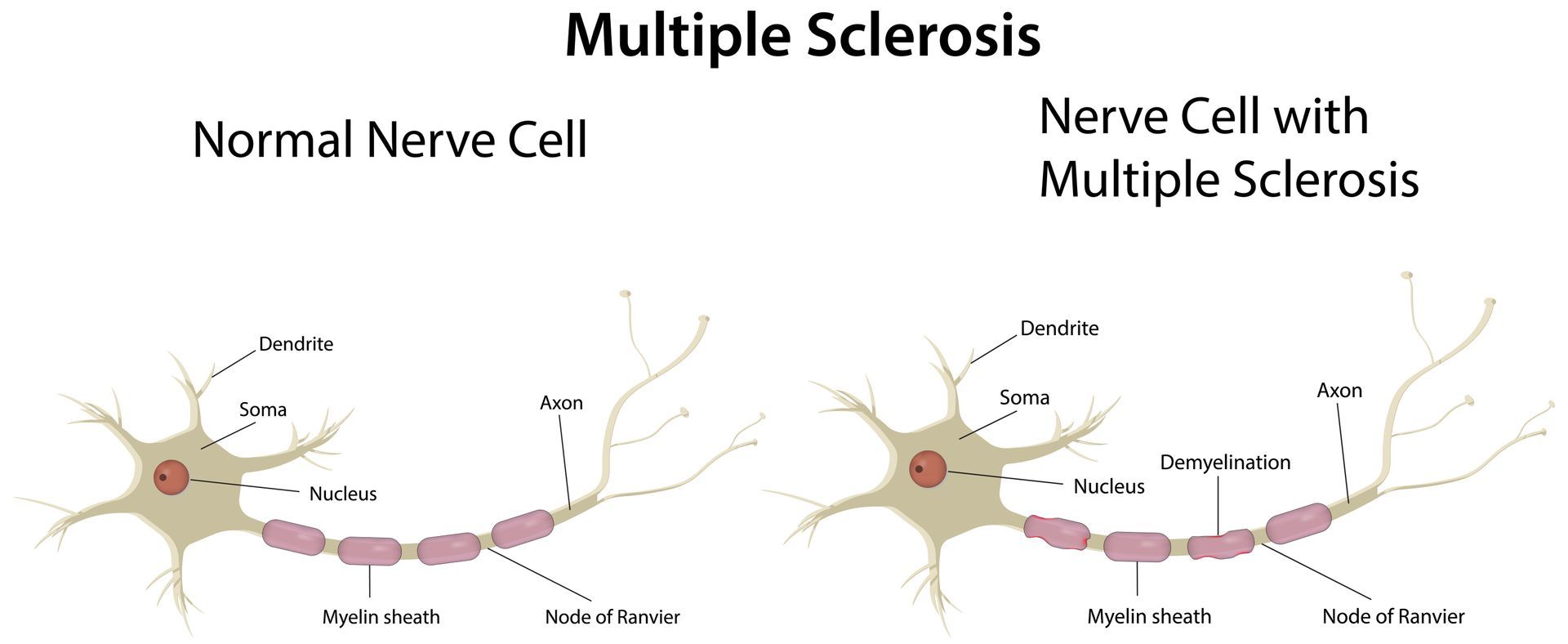
It is unknown what exactly causes this to happen. The most common thought is that a virus or gene defect, or both, are to blame. Environmental factors may play a role. Many times this is related to heavy metal deposits versus actually having Multiple Sclerosis (MS). Having testing for heavy metals is always warranted.
You are slightly more likely to get this condition if you have a family history of MS or live in an part of the world where MS is more common. This may be due to familial patterns more so than because of gene defect.
Traditional Medical Treatment Options and Diagnosis
Medications used to slow the progression of multiple sclerosis are taken on a long-term basis, they include:
- Interferons (Avonex, Betaseron, or Rebif), glatiramer acetate (Copaxone), mitoxantrone (Novantrone), and natalizumab (Tysabri)
- Fingolimod (Gilenya)
- Methotrexate, azathioprine (Imuran), intravenous immunoglobulin (IVIg) and cyclophosphamide (Cytoxan) may also be used if the above drugs are not working well
Steroids may be used to decrease the severity of attacks. Medications to control symptoms may include:
- Medicines to reduce muscle spasms such as Lioresal (Baclofen), tizanidine (Zanaflex), or a benzodiazepine
- Cholinergic medications to reduce urinary problems
- Antidepressants for mood or behavior symptoms
- Amantadine for fatigue
As with all medication, discussing the potential for side-effects and other complications is warranted before beginning any medication. Understanding what to expect and knowing what new conditions may appear is the best advice before beginning medication.
Dr. Huntoon's Alternative Medical Treatment Options
There is no known cure for multiple sclerosis at this time. However, there are therapies that may slow the disease. The goal of treatment is to control symptoms and help you maintain a normal quality of life.
The Alternative Perspective
In roughly 95 % of the cases of people being told the have MS, they actually do not. They have Heavy Metal Toxicity that is affecting their Nervous System and mimicking the symptoms of MS. If the person exhibits heavy metal toxicity, chelation therapy through a Holistic Chiropractor is warranted.
Dr. Huntoon has worked with quite a number of people who have been given the moniker of MS. And everyone of them has demonstrated Heavy Metal Toxicity. Some were willing to accept that and begin treatment, and others were not willing to accept that the Medical Doctor was mistaken.
Understanding the difference between true MS and heavy metal toxicity is prudent before beginning any medication as a treatment for MS, especially if you do not have true MS.
Discuss with Dr. Huntoon if you are suffering with true MS or if you exhibit Heavy Metal Toxicity. This can be determined in the office on your initial visit with Dr. Huntoon. If you do have heavy metals, he can discuss the specifics of what is involved with removing them from your system. The longer you wait and the more medical treatment you receive for MS, that is not really MS, the longer the road back to health will be.
What to Discuss with Your Doctor
EXPECTATIONS (PROGNOSIS)
The outcome varies, and is hard to predict. Although the disorder is chronic and incurable, life expectancy can be normal or almost normal. Most people with conditions that mimic MS continue to walk and function at work with minimal disability for 20 or more years.
The following typically have the best outlook:
- Females
- People with heavy metal toxicity
- People who were older (more than 45 years) when the disease started
- People with infrequent attacks
- People with a relapsing-remitting pattern
- People who have limited disease on imaging studies
The amount of disability and discomfort depends on:
- How often you have attacks
- How severe they are
- The part of the central nervous system that is affected by each attack
Most people return to normal or near-normal function between attacks. Slowly, there is greater loss of function with less improvement between attacks. Over time, many require a wheelchair to get around and have a more difficult time transferring out of the wheelchair.
Those with a support system are often able to remain in their home.
Complications
- Depression
- Difficulty swallowing
- Difficulty thinking
- Less and less ability to care for self
- Need for indwelling catheter
- Osteoporosis or thinning of the bones
- Pressure sores
- Side effects of medications used to treat the disorder
- Urinary tract infections
Prevention and Quick Tips
The following may also be helpful for people with MS:
- Neurologic Relief Centers Technique with information found at www.nrc.md
- Physical therapy, speech therapy, occupational therapy, and support groups
- Assistive devices, such as wheelchairs, bed lifts, shower chairs, walkers, and wall bars
- A planned exercise program early in the course of the disorder
- A healthy lifestyle, with good nutrition and enough rest and relaxation
- Avoiding fatigue, stress, temperature extremes, and illness
- Changes in what you eat or drink if there are swallowing problems
- Making changes around the home to prevent falls
- Social workers or other counseling services to help you cope with the disorder and get assistance (such as Meals-on-Wheels)
For more information about living with MS, see: Multiple sclerosis - at home Household changes to ensure safety and ease in moving around the home are often needed.