

Other >> Why Does My Doctor Think I Need Medication?
To attend a FREE Class on this topic, Click Here
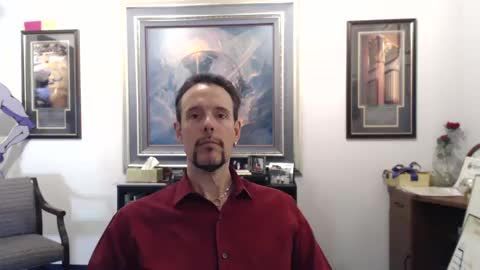
In this video, Dr. Huntoon discusses if having Symptoms is ever normal and what you need to consider if you would choose to be healthy.
Getting sick and having your body begin to break down is something no one should ever have to deal with, and yet, too many people do.
Consider what this video says and IF you have health concerns and want to deal with them Naturally, we are here to help you and look forward to serving you.

To Request an Action Plan to
Address Why Does My Doctor Think I Need Medication?Click Here
Why Does My Doctor Think I Need Medication?
A wonderful question to ask your doctor. But do not expect an answer that you can live with without qualifying their reasoning.
Quite often we are presented with a health condition we do not want. We have been taught to believe that having a health concern is a “normal” part of life and the number of these health concerns should be expected as we continue to age.
are considered a “normal” part of the aging process. You should expect to have these issues when you get towards retirement.
Have you noticed the new trend that the new “full-time job” of anyone who has reached retirement age is going to the doctor. We are expected to go for a yearly check up, to monitor the effects of our prescription medications, to have complementary screenings and to have follow-ups for any testing we have had with the appropriate Specialists or the General Practitioner that have ordered them for us. And all of these "visits" are in an effort to "prevent" us from having health concerns.
So we go for the “Free Screening” to see if we have any imbalances or have a particular concern. And when the results come back for a particular condition or a specific diagnosis, you may seem relieved that you had the Free Screening. After all, finding a health concern early on in the process usually means a better outcome versus leaving an undiscovered health issue to become worse.
Once you are given a diagnosis, you feel a vague sense of uneasiness not knowing what your prognosis will be. So you listen to the advice of your doctor, you are given a prescription or two to have filled in order to address the symptoms of your condition, and are given a follow-up appointment.
Then one of several things happens:
- 1) you are relieved to be given a name for why you are feeling the way you are feeling and will follow through with the recommendations and wait for what happens next.
- 2) you may not be convinced you actually have what you are being told, but you trust your doctor. So you will follow the advice and wait for your follow-up.
- 3) you are not convinced of your diagnosis, so you will go home and consult with Dr. Google and begin to research what you have been told.
- 4) you disagree with what you have been told and will ignore the advice and will look for a second opinion after doing some more research.
What happens next is probably the most important decision you could ever make regarding your health for both the immediate and long-term outcome. Formulate a plan for your best results regarding your "condition."
Except you are missing one vital piece of information necessary in order to consciously move forward with your care. That piece of information is the answer to the question “Why?” And the “Why?” question may apply to more than one concern you have regarding being told you need to take this prescription medication for your "condition."
The first “Why?” that needs to be answered is “Why?” do I have this concern/condition? Meaning, please explain to me why this happens and what I may have done to cause this to occur? What is the mechanism of cause? Having that information will allow you to become the owner of your problem. It will put you in charge of your understanding and give you ownership of your condition. It will also increase your confidence in what your doctor understands about your condition and that the diagnosis is correct. This is probably the most important piece of understanding you could have to solidify the partnership between you and your doctor.
Unfortunately, for most of Allopathic Medicine, the answer is usually framed in a vague “I don’t know.” It could be the non-specific answer of your genetics and you inherited your condition from your parents; It could be attributed to your life-style and the choices you have made; Or most times it is called “Idiopathic” meaning “of unknown origins.”
What follows on the heels of this first question is “Why?” do you think this medication(s) being recommended is the best solution and what I need to address my concern?"
Unfortunately again, you may be given a second vague answer regarding the "Why?" this medication is best. And this is because ALL medication have side-effects and no one can guarantee how their body will respond/react or how the condition may to the pharmaceuticals. They will answer the question based on their highest level of understanding based on previous experience. And you either feel the confidence or you don't.
What Causes Gastritis?
Do Any Of Those Explanations Satisfy You?
Do Any Of Those Explanations Satisfy You?
Most times we leave the doctor’s office with a name for our disease and with the required prescription(s) to “treat” the condition. Except we don’t fully understand it and we are completely confused, and unsatisfied with the process. We are told the medication will help us feel better and the average person still has questions. Things like:
- What exactly do I have?
- How is this medication going to help me?
- Does it address the cause of my condition OR does it simply mask my symptoms?
- How am I going to feel on this medication?
- Do I need to be aware of any side-effects and will this medication make me feel worse than I did before going on the medication.
These are some of the questions a person will consider. And most times, the answers are just as non-satisfying as the original question of “Why?”
What Are The Right Questions To Ask If Your Medical Doctor Gives You A Prescription?
15 Questions To Ask
We have put together 15 questions you should always ask before agreeing to take the prescription from your doctor. Not the medication itself, but the actual prescription/piece of paper written on by your physician.
And until each question is answered in language you fully understand, you potentially are putting yourself in a worse position than having your condition.
"WHY?"
Because many medications come with a warning stating “Once you begin the medication, DO NOT STOP the medication without proper Medical Supervision, as serious complications may occur, including death.” That’s pretty dramatic and is very “hard-sell” when you consider losing your life if you stop a medication that is supposed to address your condition.
And this begs the question, "If stopping the medication increases the prospect of serious complications, including death, how could that possibly be the best solution to your problem?
Quite simply, it cannot. This fact alone should convince you of the lack of certainty that exists within the practice of medicine.
So What Can We Do?
So What Can We Do?
I would like people to start considering, "What are we doing in our healthcare system to increase our ability to be healthy?"
Consider these two facts:
1) We are the fattest nation in the world, twice as fat as our nearest competitor country, as if competing for obesity was a “thing.”
2) We comprise 4.5 percent of the world’s population here in the United States, and yet we consume just under 92 percent of the worlds medication.
That is simply insane!
Do we need to take more chemical derived pharmaceutical drugs, either prescription or non-prescription, in order to be healthy?
The answer is Absolutely NO!
If you put chemicals into a stream of water, we call that pollution. If we filter chemicals through your body, we call that “Modern Medicine.” And we continue to agree to it because we seem to not know any better. We trust our Medical Doctors are doing the “right” thing.
And yet, when you ask them about the consequences or Side-Effects of taking their recommended medicines, they don’t have an answer for you.
Does anyone other than me see that as a major problem?
Dr. Huntoon's Alternative Medicine Perspective
How Do We Prevent This?
If we find a way to give the body the nutrition it needs to function properly, this will be the basis for healing. This is done through specific Whole Food Supplements designed to give your body the exact ingredients it needs, as provided by nature, to fill in the holes we have created in our health from our CRAP nutrition. Having a Nutritional Response Testing Evaluation to determine your specific nutritional deficiencies would be the best thing you could do to help your body get back onto the road to health. Please consider that when making the choices you make regarding your health.
Our Offer To You
Come to the office and have a Nutrition Response Testing Evaluation. This will help both of us to determine what the missing ingredients are in your diet that are creating the basis for your health concerns? Health concerns are life-stealing and should never be considered a “normal” part of the aging process. Are you too far gone? Only YOU can decide that.
Call the office today at 845-561-2225 and schedule your Nutrition Response Testing Evaluation. We look forward to serving you.
Your Solution
Your Solution
Get educated about "WHY?" you have your health concern. You are already here in the section of our website, Ask Dr. “WHY?” Continue reading the other articles and come in for a Consultation and Examination with Dr. Huntoon. Get OFF the treadmill of treatment the Medical Profession will place you on and Ask Dr. “Why?” to help you back to health. It is your birth-right. I encourage you to exercise that right.
A Different Approach
We at Advanced Alternative Medicine Center have spent the last 30 years helping people minimize, reduce or eliminate their medications to great success with the help of the prescribing physician. We evaluate and determine the underlying CAUSE of the person’s problem, educate them on how their condition came to be, and what needs to be done to restore normal function to the body so the person does not require life-time medication.
If this interests you, please contact our office at (845)561-2225 and discuss the different ways that we can help you.
We look forward to serving you!
How Do We Prevent This?
If we find a way to give the body the nutrition it needs to function properly, this will be the basis for healing. This is the foundation for health. This is and can be done through specific Whole Food Supplements designed to give your body the exact ingredients it needs, as provided by nature, to fill in the holes we have created from our CRAP nutrition. Having a Nutritional Response Testing Evaluation to determine your specific nutritional deficiencies would be the best thing you could do to help your body get back onto the road to health. Please consider that when making the choices you make regarding your health.
Our Offer To You
Come to the office and have a Nutrition Response Testing Evaluation. This will help both of us to determine what are the missing ingredients in your diet that are creating the basis for your health concerns. Health concerns are life-stealing and should never be considered a “normal” part of the aging process. Are you too far gone? Only YOU can decide that.
Call the office today at 845-561-2225 and schedule your Nutrition Response Testing Evaluation. We look forward to serving you.